
High porosity hair is very good at attracting products.
Deep conditioner.
Protein treatment.
Bond builder.
Leave-in.
Oil.
Serum.
Heat protectant.
A mask with the word molecular on it and the price of a minor household appliance.
Some of those products can be genuinely useful.
You still do not need all of them.
The best products for high porosity hair depend on why your hair is behaving that way.
Hair that has always been more permeable but is otherwise in good condition may simply benefit from adequate conditioning.
Bleached, rough, breakage-prone hair has a different problem.
Fine processed hair may need repair-focused care without being buried under rich formulas.
And if you regularly heat-style, preventing additional damage may deserve more of your budget than buying another mask.
So instead of building one universal “high porosity routine,” we chose products by job.
Every product on this list has to answer one question:
What does this add that the rest of the routine does not?
The Short Version: Our High Porosity Hair Picks
| Category | Our pick | Approx. price |
|---|---|---|
| Dry, weathered hair shampoo | Redken All Soft Shampoo | $29 |
| Rich conditioner for curls/coils | PATTERN Intensive Conditioner | $29 |
| Lightweight conditioner for fine hair | Verb Ghost Conditioner | $22 |
| Deep conditioning treatment | Briogeo Don’t Despair, Repair! Deep Conditioning Mask | $39 |
| Repair treatment for processed hair | K18 Leave-In Molecular Repair Hair Mask | $75 / $29 mini |
| Leave-in + heat protectant | Pureology Color Fanatic Multi-Tasking Leave-In Spray | $36 |
| Finishing oil for damaged hair | K18 Molecular Repair Hair Oil | $65 / $27 mini |
That does not mean the ideal routine contains all seven.
A reasonably healthy high-porosity head may need shampoo, conditioner and styling products.
A heavily bleached head may have a stronger case for a treatment.
Someone who blow-dries twice a week may get more practical value from heat protection than from collecting three different “repair” masks.
Choose the gap.
Not the entire list.
What Should You Actually Look for in High Porosity Hair Products?
Not a bottle that says HIGH POROSITY.
Start with the problem.
If your hair is rough and tangles easily
Prioritize conditioning and slip.
Conditioners can reduce friction and improve combability, which becomes especially useful on weathered or processed hair.
If your hair is bleached or chemically processed
A treatment aimed at damaged hair may make more sense.
That could mean a conditioning mask, a protein-containing strengthening product or a repair technology such as K18.
Those are not automatically the same thing.
If your hair is fine
Do not let the word high porosity convince you that every formula must be rich.
Fine hair can be highly processed and still become limp under too much conditioning.
If you heat-style
Use heat protection.
Preventing additional stress is a much clearer job than buying products indefinitely to compensate for damage after it happens.
If your hair already feels good
Do less.
Porosity is not a shopping diagnosis.
If you are still working out whether high porosity actually describes your hair — and how damage fits into that — start with our hair porosity foundation, then read High Porosity Hair: Signs, Causes & How to Care for It.
Best Shampoo for Dry, Weathered Hair: Redken All Soft Shampoo
Best for: Dry-feeling, brittle or weathered hair that wants a more conditioning wash Why it makes sense: Cleans while being positioned specifically toward softness and manageability Good to know: It is fragranced and more expensive than basic drugstore shampoo Skip it if: Your scalp is very oily or your routine needs frequent strong buildup removal Price at research: $29 for 10.1 fl oz Where to buy: Redken / authorized salon and beauty retailers
High porosity product guides frequently begin with “gentle shampoo.”
That is not particularly useful until we explain what gentle is supposed to accomplish.
If your lengths are rough, bleached or tangle-prone, you want a shampoo that cleans adequately without making those lengths significantly harder to manage before conditioner gets involved.
Redken All Soft is a reasonable fit for that role.
The current formula is positioned for dry, brittle hair and toward softness, manageability and conditioning rather than deep clarifying.
That makes it a better starting point for weathered hair than automatically reaching for the strongest cleanser on the shelf.
It does not eliminate the need for stronger cleansing if your routine develops buildup.
Nor does the argan-oil marketing make the shampoo a treatment.
Its job here is still shampoo:
clean the hair without making an already rough situation unnecessarily rougher.
At $29 for 10.1 ounces, it is not cheap enough to buy just because the bottle looks professional.
If your existing shampoo leaves your scalp clean and your lengths perfectly manageable after conditioner, keep it.
Your hair does not become more porous because your shampoo costs $8.

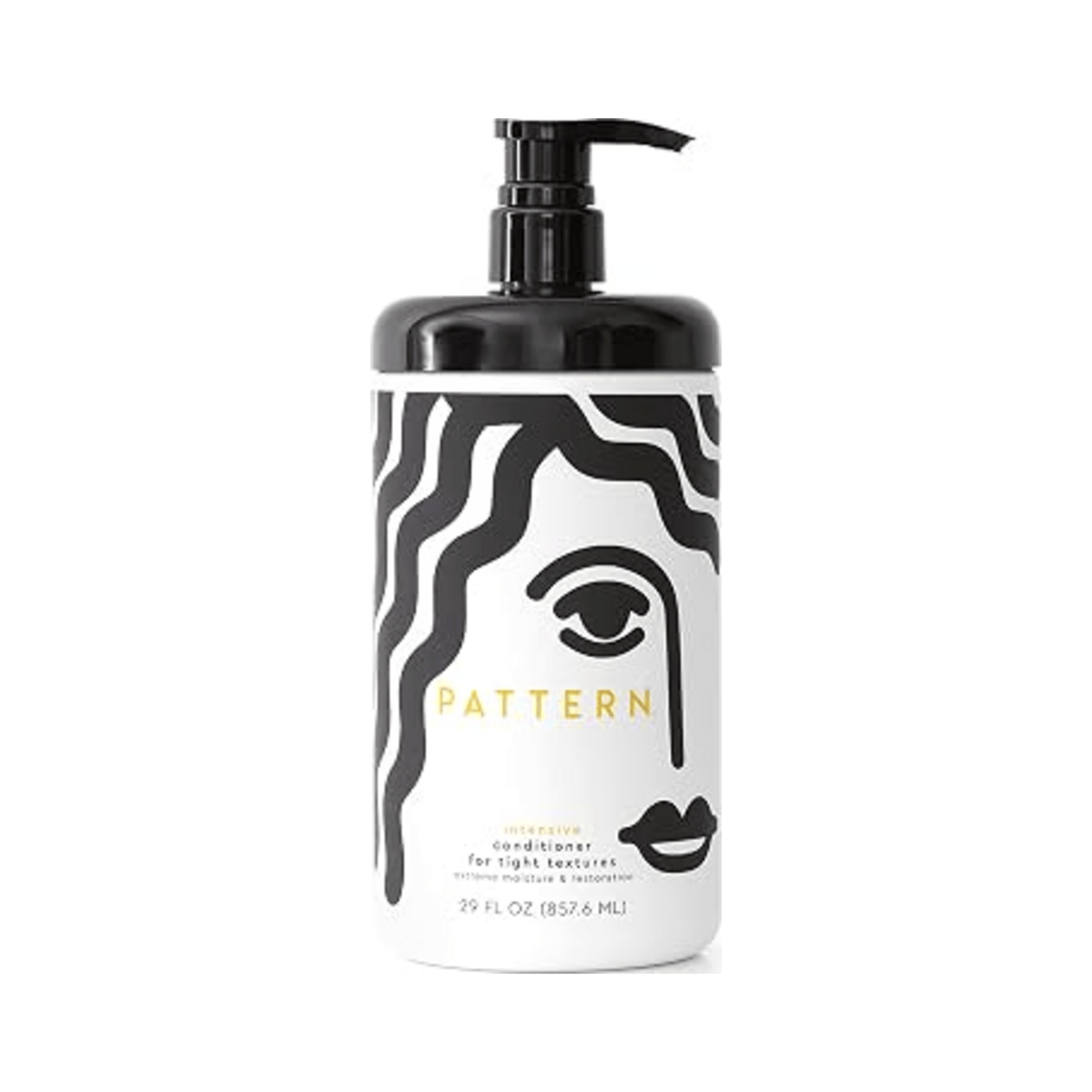
Best Rich Conditioner for Curls and Coils: PATTERN Intensive Conditioner
Best for: Dense, coarse, curly or coily hair that genuinely benefits from substantial conditioning Why it makes sense: Thick conditioner designed around intensive softness, slip and rich emollient conditioning Good to know: This is intentionally rich Skip it if: Fine hair gets flat or greasy-feeling under heavier conditioners Price at research: $29 for 13 fl oz Where to buy: PATTERN / major beauty retailers
This recommendation exists because “high porosity hair needs lightweight products” makes about as much sense as saying all high porosity hair needs heavy ones.
Some hair needs richness.
PATTERN Intensive Conditioner is currently marketed as a thick, intensive conditioner for tighter textures and contains avocado, shea and safflower oils in a formula specifically built around heavier conditioning.
That makes it a sensible option for coarse, dense curls and coils where detangling and lubrication are significant parts of wash day.
The important distinction is that we are recommending it because of hair needs, not because an oil-rich ingredient list magically fixes porosity.
Conditioning can reduce friction and improve manageability.
If your hair becomes dramatically easier to detangle with a substantial conditioner, that is useful.
If your fine hair looks like it has given up on volume after three minutes with this formula, then it is not useful to you.
High porosity does not cancel strand thickness.
Best Lightweight Conditioner for Fine High Porosity Hair: Verb Ghost Conditioner
Best for: Fine-to-medium processed or weathered hair that needs conditioning but loses movement easily Why it makes sense: Conditioner explicitly built around lighter feel and manageability Good to know: Contains moringa oil and vegan protein despite being marketed as lightweight Skip it if: Your hair needs a much richer conditioner for detangling Price at research: $22 for 12 fl oz Where to buy: Verb / authorized beauty retailers
Fine damaged hair creates an annoying little problem.
It needs conditioning.
Then you condition it.
And now it has the volume of a wet napkin.
Verb Ghost Conditioner is one of the more straightforward ways around that tradeoff.
Verb currently positions it for fine-to-medium hair and describes it as a lightweight conditioner designed to improve manageability while smoothing the hair. The formula also includes moringa oil and vegan proteins.
That matters for two reasons.
First, it gives fine high-porosity hair an option that does not assume “more porous = use the richest conditioner possible.”
Second, it is another useful reminder that words like oil and protein on an ingredient list do not tell you how heavy an entire finished formula will feel.
At $22 for 12 ounces, it is also one of the better value propositions on this list.
If it gives you enough slip, there is no need to upgrade to a $40 conditioner to make the routine look more serious.

Best Deep Conditioning Treatment: Briogeo Don’t Despair, Repair! Deep Conditioning Mask
Best for: Dry-feeling, damaged, chemically processed hair that wants a richer rinse-out treatment Why it makes sense: Combines substantial conditioning with protein-containing treatment positioning Good to know: This is a mask, not a requirement for every wash Skip it if: Your normal conditioner already gives you everything you need Price at research: $39 for 8 oz Where to buy: Briogeo / major beauty retailers
This is where we need to separate more conditioning from more science-sounding repair terminology.
Briogeo’s Don’t Despair, Repair! Deep Conditioning Mask is a rinse-out mask for dry, damaged and chemically treated hair.
The brand currently describes it as balancing protein and conditioning and prices the standard 8-ounce size at $39.
For rough, processed hair, that fills a legitimate job:
a richer treatment than your everyday conditioner.
It is particularly useful for someone who does not necessarily need a specialized bond-repair routine but notices that normal conditioning is not quite enough for older, weathered lengths.
What it does not get to do in this article is inherit every manufacturer claim without scrutiny.
Briogeo makes testing-based strengthening claims for the product. Those are manufacturer-reported results; we are not treating them as independent proof that the mask restores hair to an undamaged state.
And despite the word Repair being very enthusiastic on the jar, a rinse-out mask does not biologically heal an old hair fiber.
It can still be worth buying.
Cosmetic improvement is allowed to be useful without becoming resurrection.
What About Protein Treatments?
You do not need a separate protein product merely because your hair is high porosity.
Protein-derived ingredients vary substantially in size, chemistry and formulation.
And many products already contain protein ingredients without calling themselves PROTEIN TREATMENT in twelve-point capital letters.
Verb Ghost Conditioner includes vegan proteins.
Briogeo’s mask is explicitly positioned around protein plus conditioning.
K18’s treatment below contains hydrolyzed wheat protein in addition to its proprietary peptide.
So before adding a dedicated protein step, ask whether your current routine already contains one.
If heavily processed hair responds well to strengthening treatments, great.
If you are using conditioner + protein mask + bond treatment + repair leave-in and still planning another treatment because TikTok said high porosity hair “loves protein,” we have perhaps passed the point of diminishing returns.
This article deliberately does not nominate a separate protein treatment simply to fill a category.
The products have to earn their spot.
Best Repair Treatment for Heavily Processed Hair: K18 Leave-In Molecular Repair Hair Mask
Best for: Bleached, color-treated, chemically processed or heat-damaged hair where you specifically want a repair-focused treatment Why it makes sense: Distinct peptide-based technology rather than simply another rich conditioner Good to know: Very expensive; manufacturer claims are stronger than the level of independent evidence publicly available to most consumers Skip it if: Your hair is healthy, lightly weathered or your main issue is simply inadequate conditioning Price at research: $75 for 50 mL; $29 for 15 mL mini Where to buy: K18 / authorized beauty retailers
K18 is exactly the kind of product we should be skeptical about.
It is expensive.
It uses terms like molecular repair.
Its brand claims that a proprietary peptide reconnects damaged structures within the hair.
This is ordinarily where beauty marketing starts setting off small alarms.
But there is also a reason K18 belongs in this guide instead of being dismissed as a fancy conditioner.
The current Leave-In Molecular Repair Hair Mask uses a proprietary biomimetic peptide, sh-Oligopeptide-78, and has a very specific application protocol: shampoo, skip conditioner before application, use a small amount, wait four minutes and then continue styling. The full 50 mL bottle is currently $75.
That makes it meaningfully different in use and positioning from the Briogeo mask.
K18 currently makes strong claims about reconnecting polypeptide chains and associated structural damage from bleach, color, chemical services and heat. Those are manufacturer claims, and we would not translate them into “K18 permanently restores virgin hair.”
But for substantially processed hair, this is one of the few places where paying significantly more may at least correspond to buying a distinct technology rather than just a richer formula in nicer packaging.
The biggest downside is obvious.
Seventy-five dollars for 50 milliliters is a serious ask.
Fortunately, the application amount is small, and the brand currently offers a 15 mL mini for $29.
If you are curious but not committed, start there.
Do not buy the $75 bottle because you found one split end.

Best Leave-In + Heat Protectant: Pureology Color Fanatic Multi-Tasking Leave-In Spray
Best for: Color-treated, tangle-prone or heat-styled hair that would benefit from combining leave-in conditioning and protection Why it makes sense: One product can cover detangling, leave-in conditioning and heat-protectant roles Good to know: “21 benefits” is marketing organization, not 21 reasons you need it Skip it if: You already own a leave-in and heat protectant that work well Price at research: $36 for 6.7 fl oz Where to buy: Pureology / authorized retailers
This product gets onto the list through efficiency.
Pureology Color Fanatic is currently sold as a leave-in conditioner, detangler and heat protectant for color-treated hair, with the standard 6.7-ounce size at $36.
That is useful because high-porosity routines have a habit of turning one problem into four bottles.
If your hair tangles after washing and you regularly blow-dry or heat-style it, combining leave-in conditioning and thermal protection makes sense.
The “21 benefits” number itself is not why we selected it.
Beauty brands have become very talented at taking a multifunctional product and turning every related outcome into another bullet point.
We care about the larger jobs:
detangling.
conditioning.
heat protection.
If one bottle handles those adequately, that is a stronger buying argument than adding separate products for each.
At $36, it is not cheap.
But unlike a random repair serum, it may remove something else from your cart.
That counts.
Best Finishing Oil for Seriously Damaged Hair: K18 Molecular Repair Hair Oil
Best for: Processed hair that wants a concentrated finishing oil and is already interested in K18’s repair system Why it makes sense: Very small application amount; can be used on damp or dry hair; heat protection included Good to know: $65 is extremely expensive for a finishing oil Skip it if: You mainly want shine or smoothing — cheaper oils and serums can do that Price at research: $65 for 30 mL; $27 for 10 mL mini Where to buy: K18 / authorized retailers
This is the product on the list we would question hardest before checkout.
K18’s Molecular Repair Hair Oil is currently $65 for 30 mL, with a $27 mini available. The brand recommends starting with only one to three drops and says it can be used on damp hair before styling or dry hair as a finisher. It also claims heat protection up to 450°F/232°C.
The formula includes squalane, avocado oil, sunflower oil, light emollients and the same proprietary peptide family used by K18’s repair system.
That gives it a clearer rationale for someone already using K18 on significantly processed hair.
But if your actual goal is:
I want my ends shinier.
Please do not conclude that this is the only $65 solution.
It isn’t.
Surface smoothing and shine can be achieved with much cheaper oils and serums.
The price becomes easier to defend only if you specifically value the K18 technology, concentrate, heat-protection role and tiny application amount.
Even then, the mini is the more rational first purchase.
The It Glow is not going to make you spend $65 on oil just because your hair has high porosity.
What We Would Buy for Three Different High Porosity Routines
Here is where the list becomes useful.
Routine 1: High Porosity, but Not Seriously Damaged
Maybe your hair has always behaved toward the more porous end.
It gets thoroughly wet easily, responds well to conditioner and needs decent slip.
But there is no major bleach history, dramatic breakage or obvious processing damage.
You probably do not need a repair system.
Start with:
Shampoo: Whatever already cleans comfortably — Redken All Soft only if you need something more conditioning Conditioner: PATTERN Intensive Conditioner for coarse/dense hair OR Verb Ghost Conditioner for finer hair Leave-in/styler: Only what your actual style requires
That can be the whole routine.
No bond builder.
No protein calendar.
No emergency.
Routine 2: Bleached or Chemically Damaged High Porosity Hair
Now the priorities change.
Shampoo: Redken All Soft or another cleanser that leaves processed lengths manageable Conditioning: A suitable conditioner or Briogeo mask when richer treatment is helpful Repair treatment: K18 if you specifically want a specialized repair product and the price makes sense Leave-in/heat protection: Pureology Color Fanatic if you heat-style Finish: Optional
Notice that even here, K18 oil is not mandatory.
Neither is using Briogeo and K18 on the same wash.
Treatments are tools.
We do not need the full toolbox open on the bathroom floor every Sunday.
Routine 3: Fine, High Porosity Hair That Gets Weighed Down
Fine processed hair benefits from a slightly different strategy:
Shampoo: Clean adequately without using an unnecessarily rich routine Conditioner: Verb Ghost Conditioner Treatment: K18 in small amounts if damage justifies it, rather than automatically choosing a very rich mask Leave-in/heat protectant: Pureology Color Fanatic applied conservatively Finish: Skip oil unless you genuinely need it — or use very little
The theme is simple:
repair without flattening the hair into submission.

Conditioner vs. Mask vs. Protein vs. K18: Which One Do You Need?
This is probably more useful than another product recommendation.
Choose a normal conditioner if:
Your main issue is slip, tangling and softness after shampoo.
That is not the “basic” choice.
It is the correct product for the job.
Add a richer mask if:
Your regular conditioner is consistently not enough for weathered lengths, and an occasional heavier treatment noticeably improves manageability.
Briogeo fits here.
Think about protein/strengthening if:
Your hair is substantially processed and responds well to strengthening-focused formulas.
But check your existing products first.
You may already be using protein-containing conditioner or masks.
Consider K18 if:
You have meaningful bleach, color, chemical or heat damage and specifically want to try its proprietary repair technology.
Not because your porosity label demands it.
Use heat protection if:
You use significant styling heat.
This one is pleasingly straightforward.
You do not need to wait until hair becomes more damaged to begin trying not to damage it further.
Products You Probably Do Not Need to Use Together
This is where money articles usually become suspiciously quiet.
We will not.
A rich conditioner and deep mask every single wash
Maybe.
But start by asking what the mask adds that your conditioner does not.
If the answer is “the jar is prettier,” we have solved it.
A protein treatment plus several protein-heavy products just because of porosity
Again: high porosity does not automatically equal protein deficiency.
Multiple bond builders
The phrase bond repair now appears on an impressive number of bottles.
You do not need to stack every technology simultaneously to prove that you care about your hair.
K18 Mask + K18 Oil just because K18 recommends the system
Brands are allowed to recommend additional products.
You are allowed not to buy them.
The mask is the more distinctive product if repair is your priority.
The oil is optional.
A separate leave-in, detangler and heat protectant when one product already does all three well
This is exactly why Pureology Color Fanatic made the list.
Simplification is a feature.
Is Olaplex No.3 Worth Considering?
Yes.
So why is it not one of our main seven?
Olaplex No.3 remains one of the most recognizable bond-focused treatments, and its current formula prominently features Bis-Aminopropyl Diglycol Dimaleate, the ingredient associated with the brand’s bond-building technology.
It is a legitimate product to consider for processed hair.
But this article does not need three repair technologies competing for the same slot.
K18 won the primary specialized-repair position because its use case is clearly differentiated from our conditioning mask and because the product is centered around a distinct peptide-based treatment protocol.
That does not establish K18 as objectively better than Olaplex.
A direct K18 vs. Olaplex comparison would require its own evidence review and is outside what this article needs to answer.
If you already own Olaplex No.3 and like the result, nothing about high porosity requires you to replace it.
Is Expensive Haircare Better for High Porosity Hair?
No.
Sometimes expensive haircare contains a technology or format that gives it a genuinely different job.
K18 Mask is an example where there is at least a specific technological argument behind the premium price.
Sometimes you are mostly paying for:
branding.
fragrance.
packaging.
texture.
retailer positioning.
or simply the pleasure of owning it.
Those things can matter to you.
They are just not porosity science.
Compare what this list actually gives you:
Verb Ghost Conditioner currently costs $22 for 12 ounces.
PATTERN Intensive Conditioner is $29 for 13 ounces.
Briogeo’s Deep Conditioning Mask is $39 for 8 ounces.
K18 Mask is $75 for 50 mL.
K18 Oil is $65 for 30 mL.
There is no reasonable world in which all five are interchangeable and the most expensive automatically wins.
Buy the job.
If You Only Buy One New Product
Choose the product that matches the problem you can actually observe.
Hair tangles and feels rough after washing: upgrade the conditioner.
Fine hair gets weighed down: try the lighter conditioner before adding treatments.
Normal conditioner is not enough for weathered lengths: consider the Briogeo mask.
Hair is substantially bleached or chemically processed: K18 becomes more relevant.
You regularly use heat and currently use no protection: fix that gap first.
Hair is already soft, manageable and styling well: buy nothing.
That final recommendation is unfortunately difficult to monetize.
We are keeping it anyway.
The Bottom Line
High porosity hair does not need a collection.
It needs products that address the reason your routine is difficult.
For coarse or dense hair that wants substantial conditioning, PATTERN Intensive Conditioner is the richer option.
For fine hair that still needs slip, Verb Ghost Conditioner is the more sensible lightweight choice.
If normal conditioning is not enough for dry, weathered lengths, Briogeo Don’t Despair, Repair! Deep Conditioning Mask gives you a richer treatment without requiring a specialized repair protocol.
For genuinely processed hair, K18 Leave-In Molecular Repair Hair Mask earns a place because it offers something meaningfully different — but $75 is enough money that the damage should justify the experiment.
And if you heat-style regularly, Pureology Color Fanatic may be more useful than another treatment because it helps address what happens next, not only what already happened.
The goal is not to make high porosity hair collect enough products to behave like low porosity hair.
The goal is smoother handling, less unnecessary breakage, appropriate conditioning and fewer avoidable things making the fiber worse.
That requires considerably fewer bottles than the internet would have you believe.
High Porosity Products FAQ
What are the best products for high porosity hair?
The most useful products depend on hair thickness and damage level. High porosity hair may benefit from adequate conditioner, a richer treatment when regular conditioning is insufficient, leave-in care for tangling, heat protection when heat styling and specialized strengthening or repair treatments when meaningful chemical or thermal damage is present.
What is the best shampoo for high porosity hair?
Redken All Soft is our current pick for dry, weathered hair that wants a more conditioning everyday shampoo. It is not a clarifier, and someone with significant product buildup may still need a stronger cleanser occasionally.
What is the best conditioner for high porosity hair?
For coarse, dense curls and coils, PATTERN Intensive Conditioner is our richer pick. For fine-to-medium hair that gets weighed down easily, Verb Ghost Conditioner is the lighter option.
What is the best treatment for high porosity hair?
It depends on the problem. Briogeo Don’t Despair, Repair! Deep Conditioning Mask is our pick when the primary need is richer conditioning for dry, weathered hair. K18 Leave-In Molecular Repair Hair Mask is the more specialized option for significantly bleached, chemically processed or heat-damaged hair.
Does high porosity hair need protein?
Not automatically. Protein-containing products may be useful for some damaged hair, but high porosity itself does not establish a universal protein requirement. Several normal conditioners and treatments already contain protein-derived ingredients.
Is K18 good for high porosity hair?
It can make sense when higher porosity overlaps with substantial bleach, chemical or heat damage. We would not recommend buying it solely because an at-home porosity test labeled your hair “high.”
Does high porosity hair need a bond builder?
No. Bond-focused treatments are optional tools for certain types of damaged hair. Hair that is manageable and not substantially processed may have little reason to add one.
Should high porosity hair use oil?
Only if the oil gives you a result you want, such as smoothing, shine or reduced surface friction. Oil is not a mandatory “sealing” step, and it does not permanently close a damaged hair fiber.
What products should fine high porosity hair use?
Prioritize adequate conditioning without unnecessary weight. A lighter conditioner such as Verb Ghost may make more sense than automatically using a heavy mask every wash. Repair treatments should be added according to actual damage, not porosity alone.
Can I use a hair mask and K18 together?
They serve different roles, and K18 has specific application instructions that should be followed. The brand currently directs users to shampoo and apply its mask without conditioning first, then wait four minutes before applying other products. You do not need to stack a separate mask into every K18 wash.
Sources & Editorial Notes
Product research refreshed September 1, 2026. Prices, formulas, sizes, availability and retailer inventory can change. Every affiliate listing should be rechecked immediately before publication or update.
Current product sources
Redken All Soft Shampoo — Current official U.S. product information and pricing: $29 / 300 mL (10.1 fl oz). Redken positions it as a moisturizing shampoo for dry, brittle hair.
PATTERN Intensive Conditioner — Current official price: $29 / 13 fl oz. PATTERN positions it as an intensive, thick conditioner for tighter textures with avocado, shea and safflower oils.
Verb Ghost Conditioner — Current official price: $22 / 12 fl oz. Verb positions it for fine-to-medium hair and lists moringa oil, green tea extract and vegan proteins among its highlighted components.
Briogeo Don’t Despair, Repair! Deep Conditioning Mask — Current official price: $39 / 8 oz. Briogeo positions it for dry, damaged and chemically treated hair and describes it as balancing protein and conditioning.
K18 Leave-In Molecular Repair Hair Mask — Current official pricing: $75 / 50 mL full size; $29 / 15 mL mini. Formula includes sh-Oligopeptide-78 plus hydrolyzed wheat protein and hydrolyzed wheat starch. Current directions: shampoo, skip conditioner before application, apply 1–3 pumps according to length/density, wait four minutes, then style/add products.
Pureology Color Fanatic Multi-Tasking Leave-In Spray — Current official price: $36 / 200 mL (6.7 fl oz). Pureology positions it as a leave-in conditioner, detangler and heat protectant for color-treated hair.
K18 Molecular Repair Hair Oil — Current official pricing: $65 / 30 mL; $27 / 10 mL mini. Formula currently includes squalane, avocado oil, sunflower oil, light emollients and sh-Oligopeptide-78. Manufacturer recommends 1–3 drops and claims heat protection up to 450°F/232°C.
Olaplex No.3 Hair Perfector — Included contextually rather than as a primary selection. Current formula prominently lists Bis-Aminopropyl Diglycol Dimaleate.
Editorial evidence rule
Manufacturer testing and mechanism claims are identified as such and are not treated as independent proof that any product permanently restores damaged hair to virgin condition.
The terms repair, bond repair, molecular repair, strengthening and damage reversal are not treated as interchangeable scientific mechanisms.
The It Glow selected products according to:
- actual role in the routine;
- hair thickness/weight tolerance;
- processing and damage context;
- conditioning usefulness;
- heat-protection need;
- redundancy with other products;
- current price and value;
- whether a premium product offers a meaningfully different use case.
The article intentionally does not recommend a separate product merely to fill every imaginable category.